Curious about Reformed churches? Discover what Reformed Christians believe, how worship looks, and what makes this tradition distinct from other churches.
In this article
What Is a Reformed Church? A Plain Introduction
If you've stumbled across the term "Reformed church" and found yourself wondering what it actually means, you're in good company. Maybe you've driven past a church with "Reformed" in its name and felt curious. Maybe a friend invited you to one, and you'd like to know what you're walking into. Or maybe you've been a Christian for years and are starting to ask deeper questions about worship, theology, and church life. Whatever brought you here, this post is meant to be a friendly introduction-a starting point for understanding what a Reformed church is, what Reformed Christians believe, and why this tradition has shaped so much of Christian history.
Where the Word "Reformed" Comes From
The word Reformed points us back to the Protestant Reformation of the 16th century, when men like Martin Luther, John Calvin, and others sought to recover biblical Christianity from centuries of accumulated tradition. While Lutherans took their name from Luther, the Reformed tradition grew especially from the work of Calvin in Geneva and other Reformers across Switzerland, the Netherlands, Scotland, France, and beyond.
But "Reformed" isn't really about a personality. It's about a posture. To be Reformed is to be committed to ongoing reformation according to the Word of God-what the old phrase calls semper reformanda, "always reforming." That doesn't mean Reformed churches change with every cultural shift. It means the Bible is the standard, and the church is always submitting itself to be shaped by Scripture rather than by tradition, sentiment, or fashion.
What Do Reformed Churches Believe?
If you ask ten people on the street what Reformed churches believe, you'll get ten different answers. Some will say "Calvinism." Others will mention predestination. Still others might think of stern Puritans in black hats. The reality is richer and warmer than the caricatures.
At the heart of Reformed theology is a high view of God and a deep view of grace. Reformed Christians believe:
- Scripture alone is the final authority for faith and life. The Bible isn't one source among many-it's the rule.
- God is sovereign over all things, including salvation. He isn't reacting to history; He's writing it.
- Salvation is by grace alone, through faith alone, in Christ alone. We don't earn our way to God; He rescues us.
- Worship is regulated by God's Word. We don't get to invent worship that pleases us; we offer worship that pleases Him.
- The church is a covenant community, including believers and their children, gathered around Word and sacrament.
These convictions are summarized in historic documents called confessions and catechisms-like the Heidelberg Catechism, the Westminster Confession of Faith, and the Three Forms of Unity. These aren't replacements for the Bible. They're careful, communal summaries of what Christians have read in the Bible together for centuries. A confessional church is simply one that says, "Here's what we believe Scripture teaches-come and see."
The Heart of Reformed Theology: Covenant
If there's one concept that ties Reformed theology together, it's covenant. Webster's 1828 Dictionary defines covenant as "a mutual consent or agreement of two or more persons, to do or to forbear some act or thing." In Scripture, a covenant is the way God binds Himself to His people in love and faithfulness.
Reformed Christians read the Bible as one unfolding story of covenant. From Adam to Noah to Abraham to Moses to David, all the way to Christ, God is keeping His promise to redeem a people for Himself. The New Testament isn't a reset button on the Old; it's the flowering of what God planted in the beginning.
This is why Reformed churches typically baptize the children of believers. If you've ever wondered why do Reformed churches baptize infants, the short answer is covenant. Just as God included the children of believing Israelites in the sign of the covenant (circumcision), He includes the children of believers in the sign of the new covenant (baptism). Children of the faithful aren't outsiders waiting to be let in-they're members of the covenant community, being raised in the nurture and admonition of the Lord. (We have other posts that go deeper on infant baptism if you want to explore that further.)
How Reformed Worship Looks and Feels
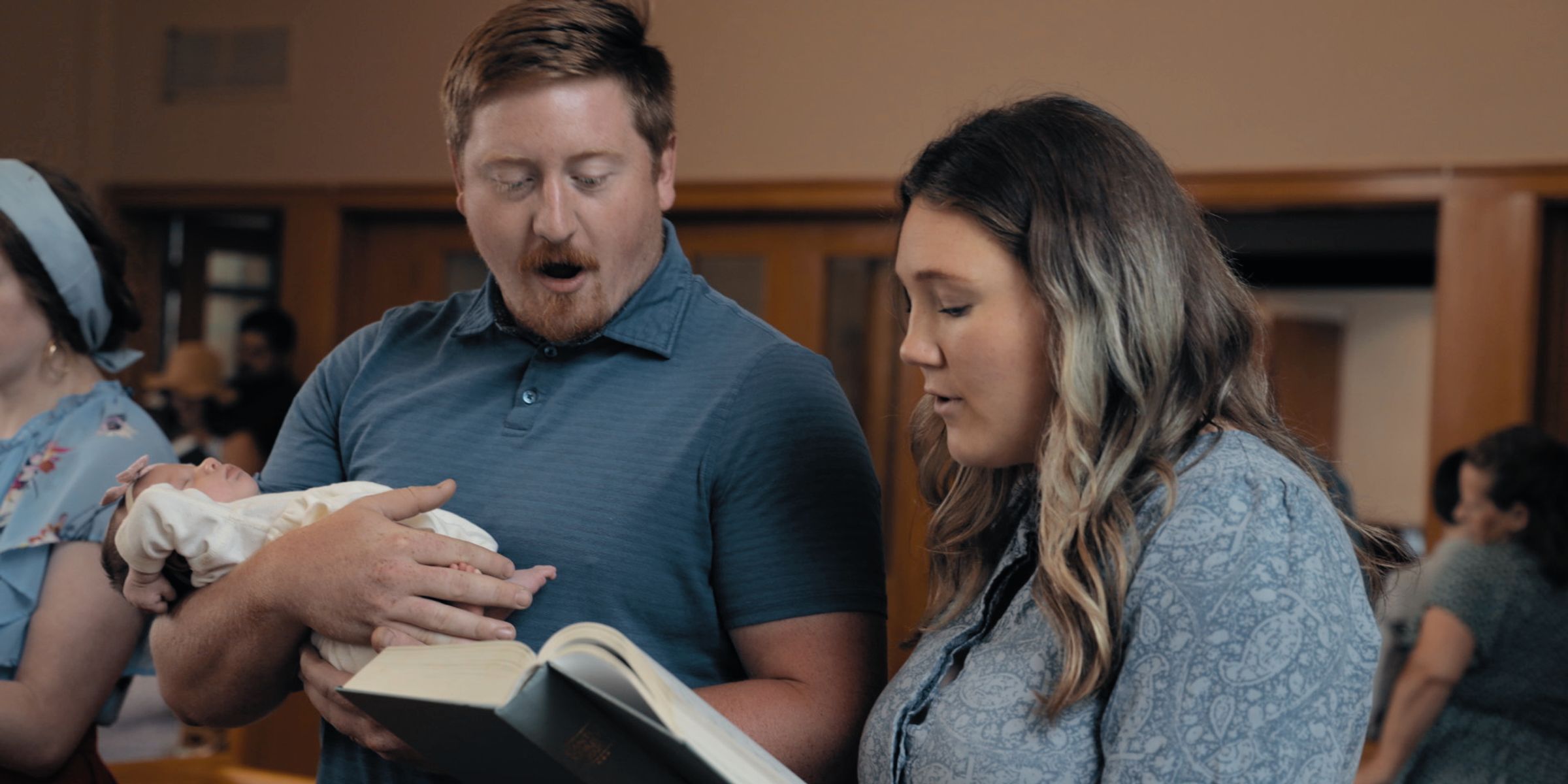
Walk into a Reformed worship service for the first time, and a few things may stand out. The service tends to be liturgical-meaning it follows a thoughtful order rooted in Scripture. There's a call to worship, confession of sin, assurance of pardon, the reading and preaching of God's Word, the Lord's Supper, and a benediction. The structure isn't stiff; it's a pattern that lets the gospel be rehearsed every week.
You'll likely hear a lot of singing, often including the Psalms-the songbook God gave His own people. You'll hear Scripture read at length, not just sprinkled in as decoration. You'll hear preaching that aims to explain the text and apply it, not perform for the crowd. And in many Reformed churches, you'll see communion celebrated weekly, because the Lord's Supper isn't an occasional add-on but a regular means of grace where Christ feeds His people.
Children are welcome and often present in the service rather than swept off to age-segregated programs. This can feel surprising if you're used to a different model, but the Reformed conviction is that the family worships together because the family belongs together in the household of God.
How Reformed Churches Differ from Other Traditions
People often ask about the difference between Reformed churches and other Protestant traditions. Here's a quick orientation:
- Reformed vs. Presbyterian: There's huge overlap. Presbyterians are part of the broader Reformed family, distinguished mostly by their form of church government (rule by elders in connected presbyteries). Many Presbyterian churches are fully Reformed in theology.
- Reformed vs. Baptist: Reformed Baptists share much of Reformed theology but typically reject infant baptism and practice believer's baptism only. Confessionally Reformed churches generally affirm covenant baptism for the children of believers.
- Reformed vs. broadly evangelical: Many evangelical churches share core gospel convictions with Reformed churches, but tend to be less confessional, less liturgical, and less focused on covenant theology and the sacraments.
None of this is about saying "we're right and they're wrong" on every issue. It's about understanding what makes Reformed churches distinctive so you can know what you're stepping into.
Why This Tradition Still Matters
It would be easy to assume the Reformation is ancient history, a museum piece. But the truths recovered in the Reformation aren't museum pieces-they're living water. In a culture that pulls us toward shallow spirituality, self-invented worship, and disposable community, Reformed churches offer something steady: the Word of God preached, the sacraments administered, the saints gathered, and the covenant Lord at the center of it all.
This doesn't make Reformed churches perfect. They're full of sinners being sanctified, just like every other church. But the goal isn't a perfect church-it's a faithful one, gathered around Christ, shaped by Scripture, and always reforming.
A Final Word
If you're new to all this, take it slow. Read the Bible. Visit a Reformed church and see for yourself. Talk to a pastor. Ask questions. The Reformed tradition isn't a club for insiders-it's a family of believers who've been trying, with God's help, to recover and pass on what the church has confessed for two thousand years: that Jesus Christ is Lord, that He saves sinners by grace, and that He is gathering a people to Himself through the means He has appointed.
If you'd like to take the next step, we'd love to have you visit. You don't need to dress up, know the right words, or have it all figured out. Just come and worship with us. We think you'll find that what's old is, in fact, beautifully new every Lord's Day.